How your appetite actually changes
Tirzepatide works on two gut hormones, GIP and GLP-1. In practical terms, two things happen. First, your stomach empties more slowly. Second, the signals that tell your brain you are full arrive sooner, stronger, and last longer. In the SURMOUNT-1 trial (NEJM 2022), participants on the highest dose lost up to 22.5% of their body weight over 72 weeks — most of that change is driven by how much less you eat without trying.
What this feels like, day to day, is that a portion that used to feel small now feels like enough. Two spoons of stew used to warm up the plate; now it warms up the whole meal. A ladle of rice is a full plate. The second helping you used to take at weddings stops calling you.
This is the medicine working. It is not in your head. What it does ask from you is that you learn new portion sizes for foods you have eaten the same way your whole life.
The core idea
Your body will tell you the new portion. Your culture will tell you the old one. In the early weeks, let your body win. Put less on the plate before you start.
Rice, swallow, and the portion shift
Rice and swallow are the backbone of most Nigerian meals. They are also the foods where portion size most often collides with how tirzepatide changes your hunger. Here is a practical starting point, based on what most people on 2.5mg and 5mg tolerate in the first eight weeks. Every body is different. Use these as starting points, not rules.
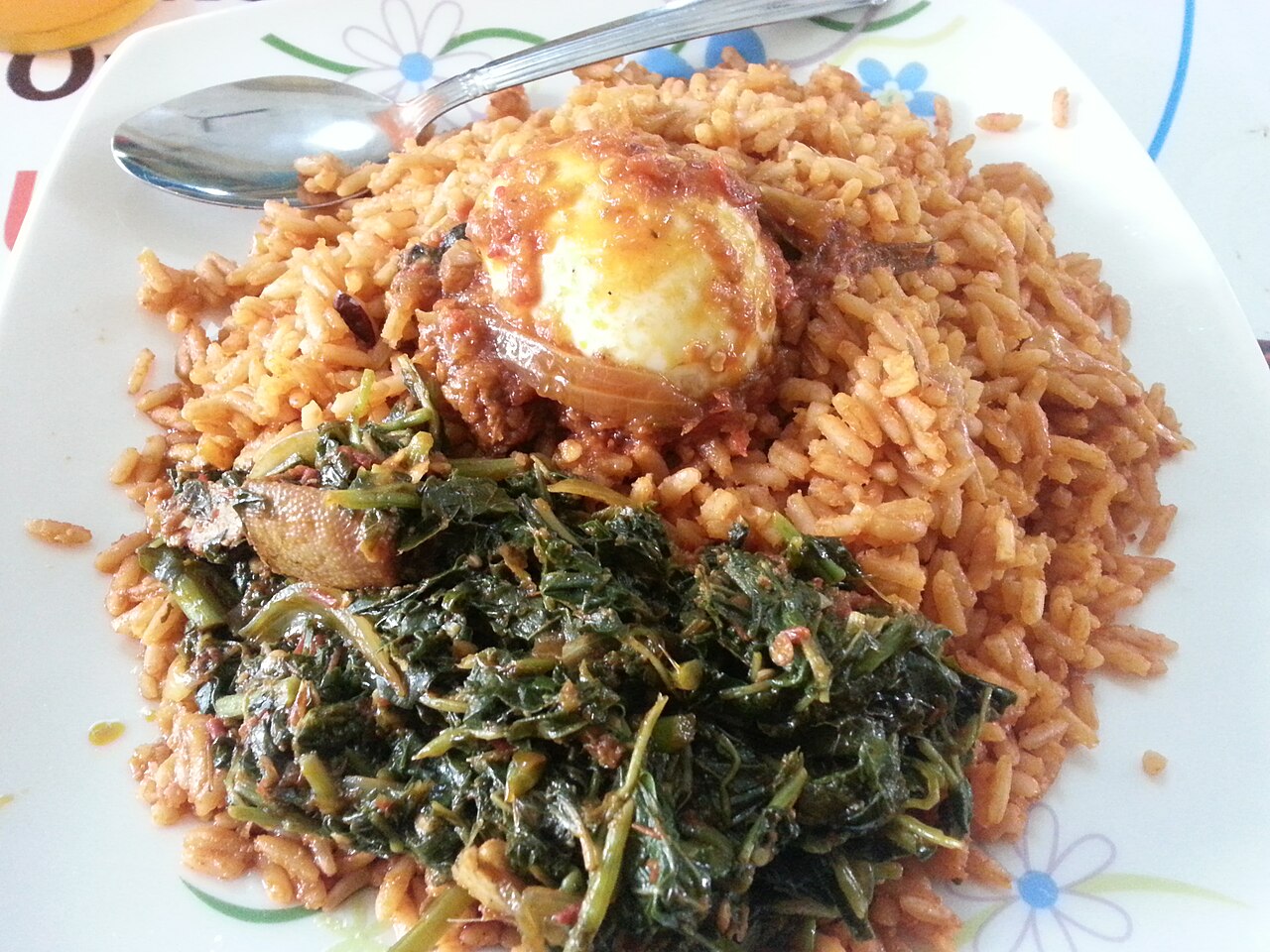
Jollof rice Usually fine in smaller portions
Starting portion: one cupped-hand scoop (roughly one small ladle, or half what you used to serve). Pair with a fist-sized portion of protein — grilled chicken, fish, or beef — and a handful of salad or steamed vegetables.
Party jollof is often cooked with more oil than home jollof. If the rice is glistening, eat half of what you planned and see how you feel in an hour.
Pounded yam, amala, eba, fufu Go carefully
Starting portion: a piece the size of your fist, not two or three fists. Swallows are energy-dense and slow to move through a stomach that is already emptying slowly on tirzepatide. Large portions are the single most common cause of discomfort and nausea we see in the first month.
Eat slowly. Take a sip of water between swallows (not gulps — sips). Stop as soon as the soup stops tasting as good as it did at the first bite. That is your full signal.
Ofada rice Usually well-tolerated
Starting portion: half a cup, with generous ofada stew or ayamase (moderate palm oil — not floating). Ofada's unpolished texture slows eating naturally, which helps you notice fullness before you overshoot.
Beans, rice-and-beans Often easier than rice alone
Starting portion: one small bowl. Beans carry protein and fibre, which most people on tirzepatide tolerate better than plain carbohydrate. A small portion of rice-and-beans with stew is often a gentler meal than a large portion of plain rice.
Stews, soups, and proteins
The rule of thumb: lighter stews, leaner proteins, less palm oil in the first weeks, then re-introduce. Tirzepatide slows gastric emptying; very oily food sits heavy and is the second most common trigger for nausea after oversized portions.
What works well
- Pepper soup — catfish, goat, or chicken. Broth-based, light, warming, easy to sip slowly. One of the most tolerated meals on treatment.
- Egusi, efo riro, ogbono — in moderate portions, with less palm oil than your home recipe probably uses. Pair with a smaller piece of swallow.
- Grilled or oven-baked croaker, titus, tilapia — with steamed vegetables or a small portion of ofada.
- Chicken suya or grilled chicken — protein-forward, not too spicy in the first weeks.
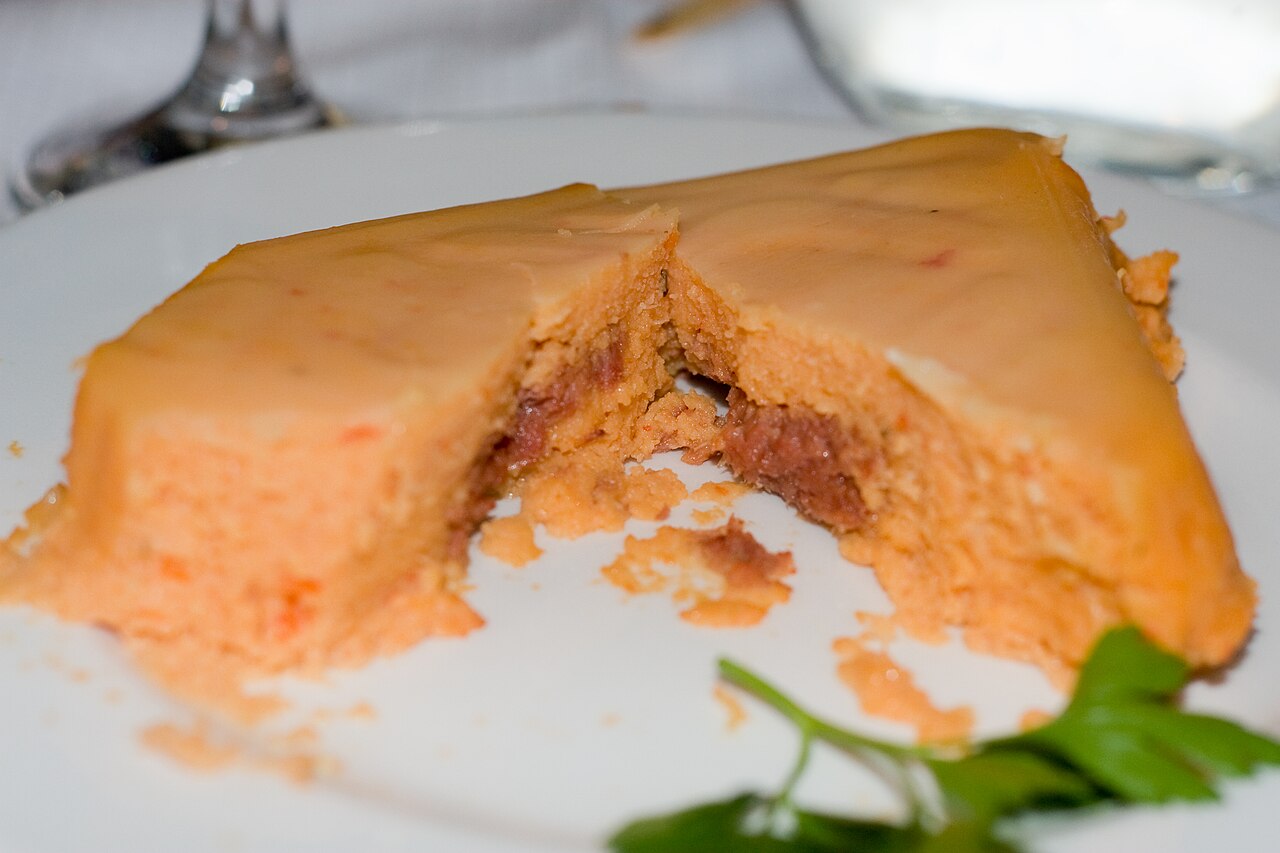
- Moin moin — steamed bean pudding is protein-rich, filling in small quantities, and almost always well-tolerated.
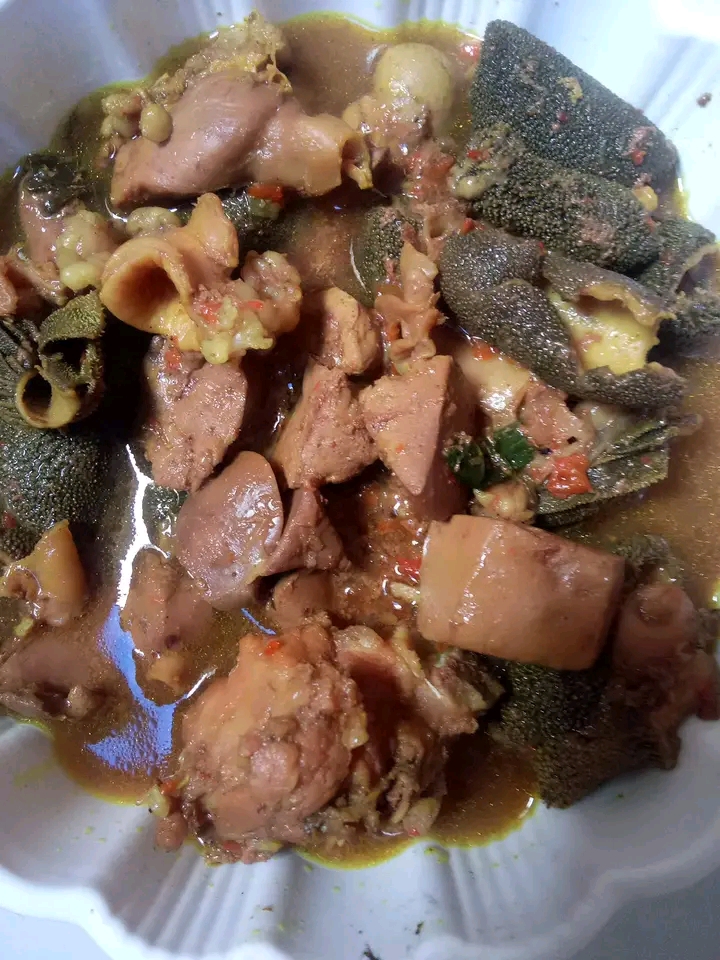
- Nkwobi — lean cuts only, and ask for less palm oil in the dressing. Share the portion.
What to ease up on in the first month
- Efo or egusi floating in palm oil. The oil layer is what your stomach struggles with.
- Very rich stews with assorted meat — shaki, pomo, liver — these are not forbidden, just heavy. Smaller portions, later dose weeks.
- Large chunks of suya — the oil and pepper combination can push nausea. Smaller skewers, chew slowly.
Snacks that work, snacks that don't
Many people find they do not want to snack at all in the first weeks — the hunger simply is not there. That is normal. If you do want something between meals, these are gentle options.
Snacks that usually sit well
- Groundnuts — a small handful (not a full bowl). Protein and healthy fat.
- Banana — a whole one or half, depending on size.
- Tiger nuts (ofio) — a small handful. Easy on the stomach.
- Boiled corn — one cob, with or without coconut.
- Garden eggs — low-calorie, high-fibre, often paired with groundnut paste or honey.
- Roasted plantain — a small portion, not the whole rack from a bole stand.
- Boiled eggs — one or two, a solid protein snack.
Snacks to approach with caution
- Akara (bean cakes) — deep-fried. A small portion is fine; a full breakfast plate is heavy.
- Puff puff, chin chin, meat pie — fried and sugary. Fine occasionally, not a daily snack.
- Fried yam, fried plantain (dodo) — fried carbs sit heaviest on a slowed stomach.
Drinks: water, zobo, fizzy, kunu
The single most important change is hydration. Tirzepatide reduces thirst signals for many people, and mild dehydration makes nausea worse. Aim for 2–3 litres of water a day, sipped through the day rather than gulped at meals.
Drinks to lean on
- Water — plain, room temperature is often easier than very cold water in the first weeks.
- Kunu aya (tiger-nut drink) — naturally sweet, hydrating, gentle on the stomach. A good post-walk drink.
- Zobo (hibiscus) — home-brewed and lightly sweetened is excellent. Commercial or heavily sugared versions can carry more sugar than a fizzy drink.
- Coconut water — hydrating and gentle.
- Ginger tea — if you are nauseous, warm ginger in water (not sugary ginger drink) helps many people.
Drinks to ease up on
- Carbonated drinks — Coke, Fanta, Malt, fizzy water. Bubbles plus a slow stomach equals bloating and nausea. Most people come back to them after the first four weeks.
- Very sweet commercial zobo — check if it is sweetened with sugar syrup. Home-made is almost always better.
- Palm wine and heavy alcohol — alcohol on an empty, slow stomach hits harder. Small amounts after food are better than drinks on an empty stomach, if you drink at all.
Foods that commonly trigger nausea on tirzepatide
This is the honest list, from the side-effect logs of people on treatment. Everyone is different, but these are the repeat offenders — especially in weeks one to four and in the 48 hours after a dose step up.
- Heavy fried foods — akara eaten as a full meal, bole with lots of oil, fried plantain, deep-fried fish.
- Palm-oil-heavy stews — efo or egusi where the oil layer is visible on top.
- Large portions of swallow — two or three fists of pounded yam or eba is the single most common trigger.
- Very spicy suya — especially eaten quickly, late at night.
- Rich celebration meals eaten fast — the wedding plate of jollof, chicken, salad, small chops, and meat pepper soup, all at once.
- Late, large dinners — a heavy plate at 10pm will often still be sitting when you lie down.
None of this is forbidden. The medication is not asking you to give up your culture. It is asking you to eat less, more slowly, and with less oil, until your body recalibrates — usually by week four or five.
Eating out: suya joints, buka, weddings
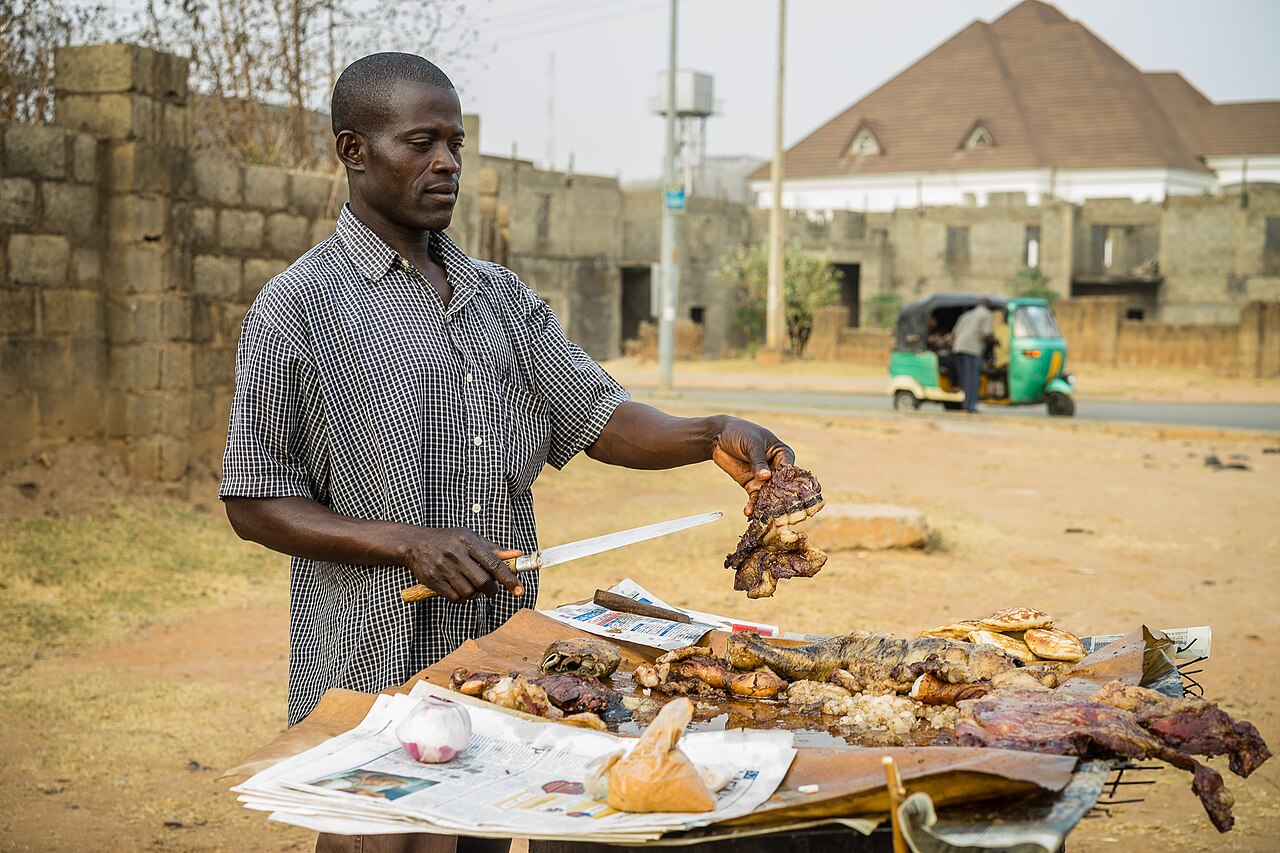
Suya joints
Order chicken or beef suya, half the quantity you normally would, and ask for less yaji if pepper upsets your stomach. Eat slowly. A small bottle of water with it is non-negotiable.
Buka lunches
Buka is often where people on tirzepatide first realise how much smaller their portions have become. Try asking for half rice, more stew, and a side of salad or steamed vegetables. Or: one wrap of eba with a generous helping of egusi and a piece of fish, instead of three wraps and a little stew.
Owambe, weddings, family events
The plate that comes to you at a Nigerian wedding is not the plate your stomach wants right now. Three strategies that work for our patients:
- Eat before you go, if you can. A small, sensible meal at home means you are not arriving hungry into a buffet.
- Take a small first plate. Jollof, a piece of chicken, salad. Eat slowly. If you are still genuinely hungry forty minutes later, go back. You almost never will be.
- Accept the plate, eat half. At most Nigerian events it is rude to refuse. It is not rude to eat a reasonable portion and leave the rest. “I am full, thank you” is a complete sentence.
Home entertaining
If you are cooking for a crowd, you will often taste too much while cooking and not eat at the table. Serve yourself a small plate first, sit down, and eat with everyone else. Your body will thank you.
A sample day or two
These are illustrative, not prescriptive. Your care team may tailor advice during your review.
Sample day, week 2 on 2.5mg
- Breakfast: One slice of wholemeal bread, two boiled eggs, a slice of avocado, a cup of tea.
- Mid-morning: A small handful of groundnuts, a glass of water.
- Lunch: Half a cup of ofada rice with ayamase and a piece of grilled fish. A small side of vegetables.
- Afternoon: A banana, water.
- Dinner: A bowl of catfish pepper soup, early (7pm), before bed feels too close.
- Fluids: 2.5 litres of water, one glass of home-brewed zobo.
Sample day, week 6 on 5mg, social event
- Breakfast: Moin moin with a boiled egg, tea.
- Lunch (before the event): A small bowl of beans and one plantain round.
- Event: One small plate of jollof, a piece of chicken, salad. Water, not malt. One small puff puff at the dessert table.
- Evening: If hungry, a light snack — garden eggs and groundnuts.
When to call us
Message our care team via your patient dashboard or email if you experience any of the following:
- Vomiting that prevents you from keeping fluids down for more than 24 hours.
- Severe upper-abdominal pain that is sharp, persistent, or radiates to your back (this can be a sign of pancreatitis, which is rare but serious — get medical care urgently).
- Signs of dehydration — very dark urine, dizziness, fast heartbeat.
- You are losing more than 1.5% of your body weight per week, consistently.
- You are unable to eat more than a few spoonfuls at any meal for several days.
Most people on tirzepatide eat less but eat normally. If eating has become genuinely difficult, tell us — a dose hold or slower titration often solves it.
A closing note
Nigerian food is not the problem. It never was. It is rich, nutrient-dense, and built around shared meals — all of which are good things. What tirzepatide changes is how much of it your body wants in one sitting. Learn the new portion, eat more slowly, lean on your proteins and vegetables, and let the medication do its job. You do not have to become a different person to lose weight. You just have to eat like someone whose fullness arrives earlier.
Medical notice: This information is educational and does not replace personalised medical advice. Always seek care from a qualified medical professional for concerning symptoms. Our care team can be reached through your patient dashboard after approval.